
A little space
for your
whole world.
Your photos, videos and files.
A private library. Sharing on your terms.
Made for iPhone & Android · Web preview
Big moments. Little details.
Keep them together.
NO COMPRESSION. ON ANY PLAN.
Your originals. Bit for bit.
CloudWink never compresses, resizes or re-encodes what you upload. iPhone HEIC photos and HEVC videos stay exactly as your camera saved them, and every upload is verified on arrival before it counts as saved.
Free up your phone, safely.
Phone copies are removed only once they’re confirmed safe in your library.
Duplicates, matched exactly.
Identical files are found byte for byte. Never by name or guesswork.
30 days to change your mind.
Deleted files wait in Trash and restore right back into their albums.
A folder only you can open.
Locked folder stays hidden behind Face ID, fingerprint or passcode.


PRIVATE ALBUMS. YOUR TERMS.
Share a little. Keep control.
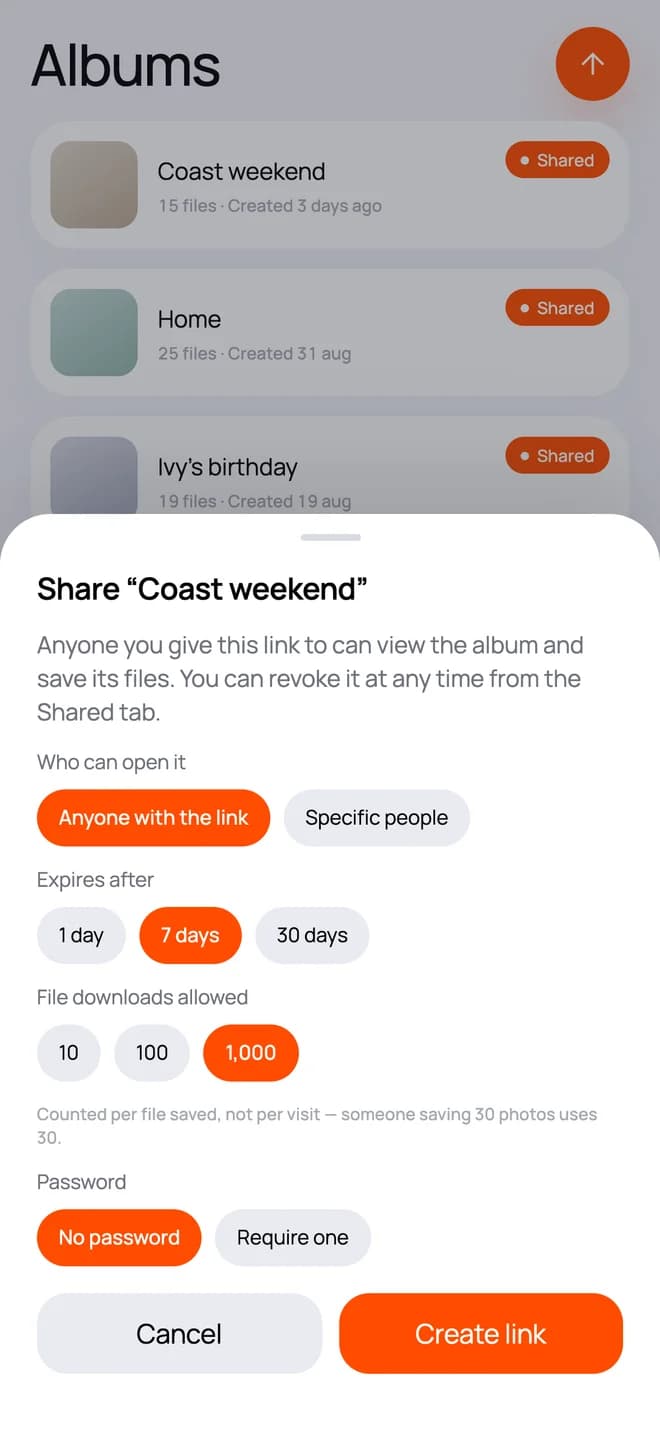
Some moments are just for you. Others are worth passing on. Create an album link and choose how it works.
At home.
Wherever you are.
CLOUDWINK FOR iOS
Your world. In your pocket.
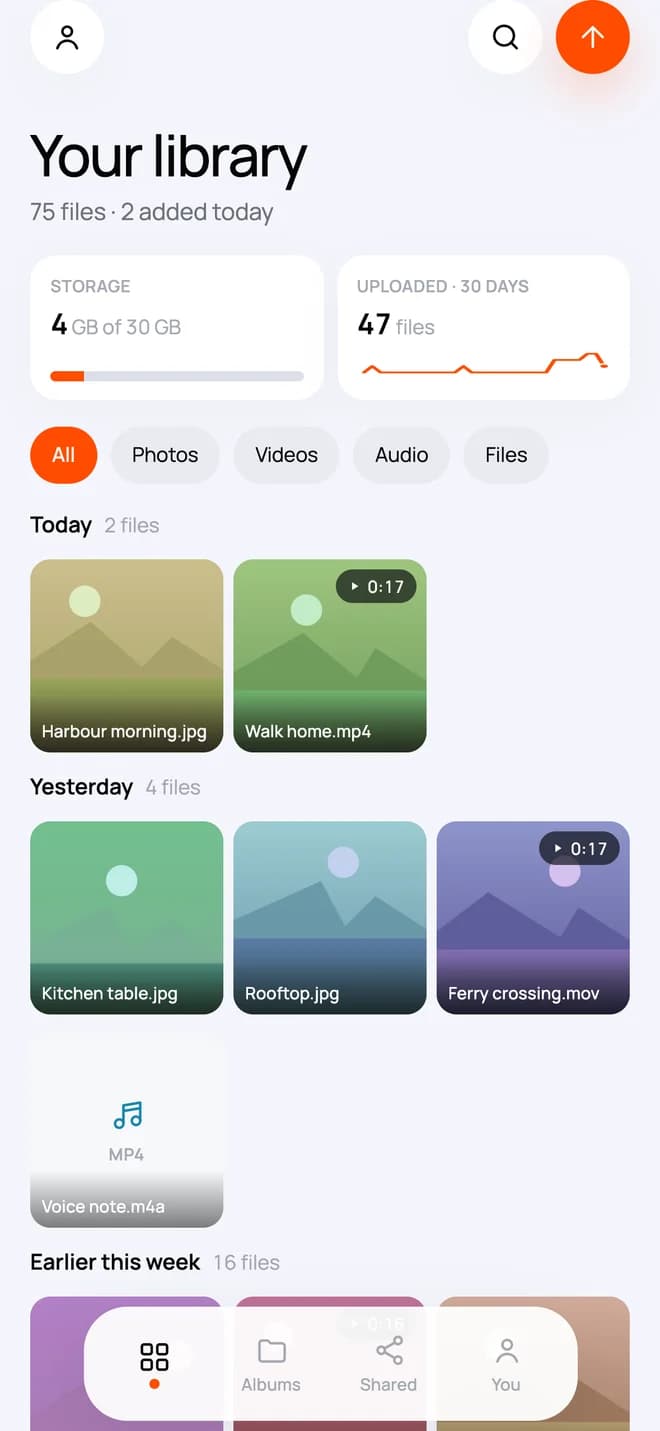
Bring your photos and files together on iPhone. Browse your library, collect moments into albums and share just what you choose.
- Add photos, videos, audio and PDFs
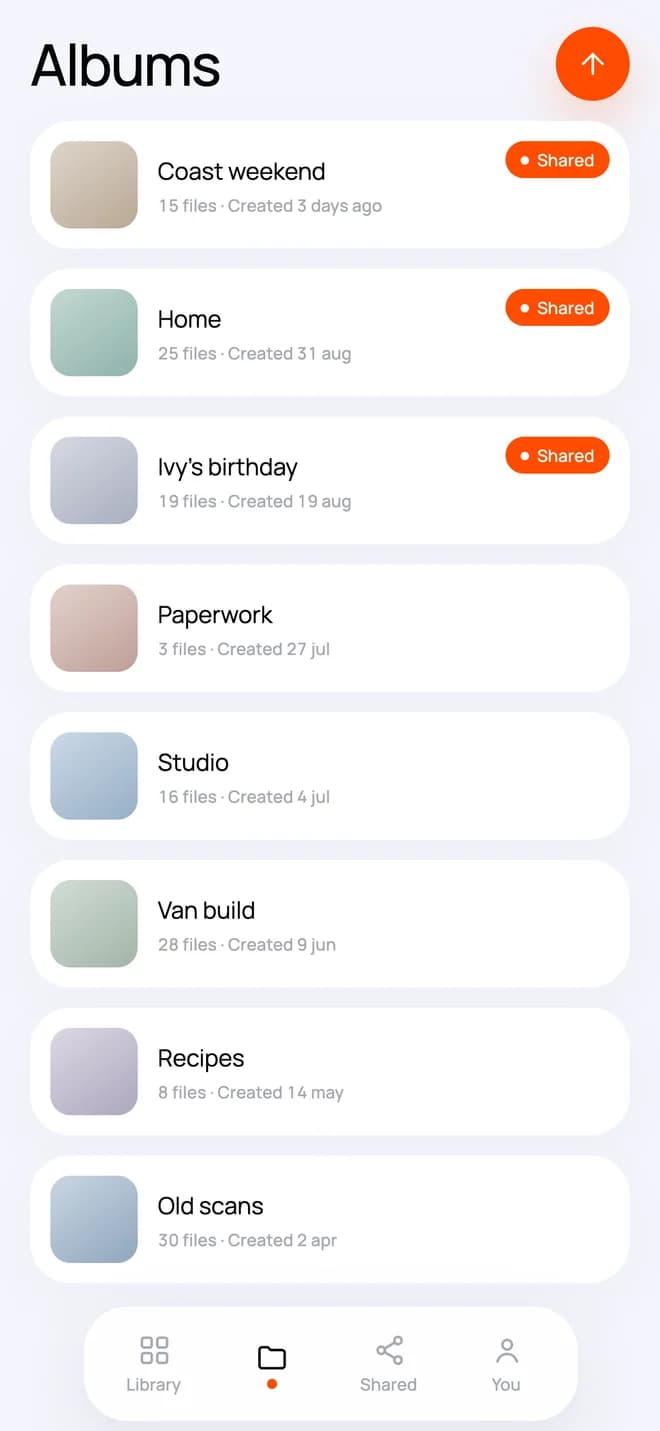
- Organize albums and browse by date
- Share albums through the native share sheet
App Store link coming soon
Explore iPhoneA private library starts with clear choices.
No public feed. Deliberate sharing. Plain explanations of what the controls do.
What is CloudWink?
CloudWink is a private library for photos, videos, audio and PDFs. You can browse your files, organize them into albums, track storage and create controlled album share links.
Are my albums public?
Your library is not a public feed. Sharing starts when you create an album link. You can choose a password, an expiry date and a file-download limit. Anyone with an unrestricted link may be able to open it, so share it thoughtfully.
Can I stop sharing an album?
Yes. Revoke its link from Shared to stop new downloads. Previously issued download URLs may remain usable for up to a minute. Files someone has already downloaded cannot be recalled.
What does a download limit count?
The limit counts file-download URLs issued, not album views. Opening several files can use several downloads. It is a way to limit access, not a count of unique people.